Send your drawing. Get a quote in 1 business day.
Include your annual volume and tightest tolerance, and we can quote tooling and unit price right the first time.
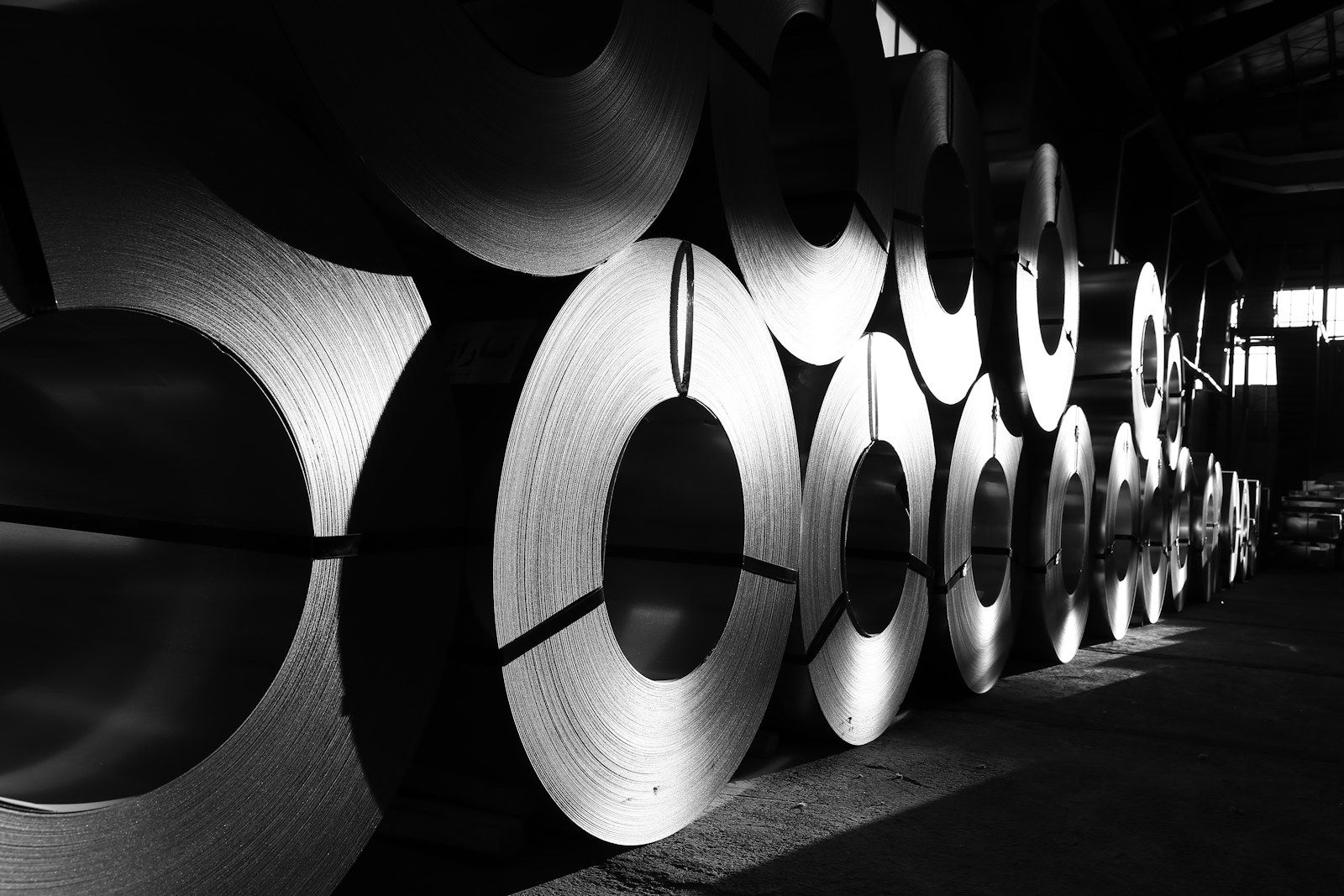
SUS304 is the JIS name for austenitic 18% chromium, 8% nickel stainless steel, equivalent to AISI 304, UNS S30400 and EN 1.4301. It resists corrosion without coating, forms and welds well, and is non-magnetic when annealed. We stamp it from 0.5 mm coil and laser cut, bend and weld it as sheet.
| Standard | JIS G 4305 (cold-rolled sheet/strip), JIS G 4313 (spring strip) |
|---|---|
| Equivalents | AISI 304, UNS S30400, EN 1.4301, GB 06Cr19Ni10 |
| In production at Sierxi | 0.5 mm coil for stamping; sheet for fabrication |
| Processes | Stamping, laser cutting, CNC bending, laser welding |
SUS304 is an austenitic chromium-nickel stainless steel. The chromium forms a thin passive oxide layer that protects the surface, so parts can be used bare in most indoor and many outdoor environments. It is the most widely used stainless grade, which makes coil and sheet easy to source in many thicknesses and finishes.
| Element | JIS G 4305 range (%) |
|---|---|
| Carbon (C) | ≤ 0.08 |
| Chromium (Cr) | 18.00–20.00 |
| Nickel (Ni) | 8.00–10.50 |
| Manganese (Mn) | ≤ 2.00 |
| Silicon (Si) | ≤ 1.00 |
| Property | Typical value |
|---|---|
| Tensile strength (annealed, JIS G 4305) | ≥ 520 N/mm² |
| 0.2% proof stress (annealed) | ≥ 205 N/mm² |
| Elongation (annealed) | ≥ 40% |
| Hardness (annealed) | ≤ 200 HV |
| Density | about 7.93 g/cm³ |
| Elastic modulus | about 193 GPa |
| Thermal conductivity | about 16 W/m·K |
Annealed SUS304 is soft and very formable — right for brackets, covers and deep bends. For clips, spring contacts and thin covers that must hold their shape, a cold-rolled temper from JIS G 4313 spring strip (SUS304-CSP) is used. Typical tempers are 1/2H, 3/4H and H; harder tempers give more spring force but need larger bend radii and crack more easily across the rolling direction.
Put the temper or the required hardness on the drawing, not just “SUS304”. Otherwise most suppliers will quote annealed material, and your clip may not hold its spring force.
Annealed SUS304 is essentially non-magnetic. Cold work — rolling to a hard temper, stamping or bending — transforms some austenite to martensite, so formed areas can become slightly magnetic. If a part must be non-magnetic, say so on the drawing; harder tempers and heavily formed features are where it shows.
Common sheet finishes are 2B (smooth matt), BA (bright annealed), No.4 and HL (brushed). After welding or heavy machining, pickling and passivation restore corrosion resistance; we arrange this with qualified finishing partners. In chloride environments such as coastal sites or de-icing salt, consider SUS316 instead.
They are equivalent grades with closely matching chemistry. SUS304 is the JIS designation, 304 the AISI/ASTM one and 1.4301 the European number. See our equivalents table for other standards.
It can, but it needs an aggressive flux and is harder to solder than nickel silver or tin-plated steel. For solder-mounted shielding cans we usually suggest C7701 nickel silver.
Usually not. It is used bare, brushed or passivated. Plating is only needed for special contact or solderability requirements.
We currently run 0.5 mm SUS304 coil; our stamping range is 0.15–1.2 mm. Thicker stainless is laser cut and bent.
Equivalent grades for SPCC, SGCC, SUS304, A5052 and C7701 across JIS, ASTM/UNS, EN and Chinese GB standards, for stamping and sheet metal.
Laser cut, bent and laser welded stainless enclosures, panels and frames.
Flat springs, grounding fingers and battery contacts.
Light, corrosion-resistant Al-Mg alloy for covers, plates and housings.
Include your annual volume and tightest tolerance, and we can quote tooling and unit price right the first time.