Send your drawing. Get a quote in 1 business day.
Annual volume and your tightest tolerance help us quote tooling and unit price accurately the first time.
Sierxi stamps small precision parts — EMI shielding cans, terminals, spring clips and brackets — on 13 high-speed presses from 60 to 250 tons in Suzhou, China. We hold ±0.02 mm on critical features, run progressive dies on 0.15–1.2 mm strip, and quote from 1,000 pieces with about 300,000 pieces of monthly capacity.

| Presses | 13 high-speed presses, 60–250 T |
|---|---|
| Largest bed | 2800 × 920 mm |
| Tooling | Progressive (continuous) dies, single-hit dies |
| Materials in production | SUS304, A5052, C7701 nickel silver, SPCC, SGCC |
| Typical strip thickness | 0.15–1.2 mm |
| Tolerance | ±0.02 mm on critical dimensions |
| Minimum order | 1,000 pcs |
| Capacity | About 300,000 pcs per month |
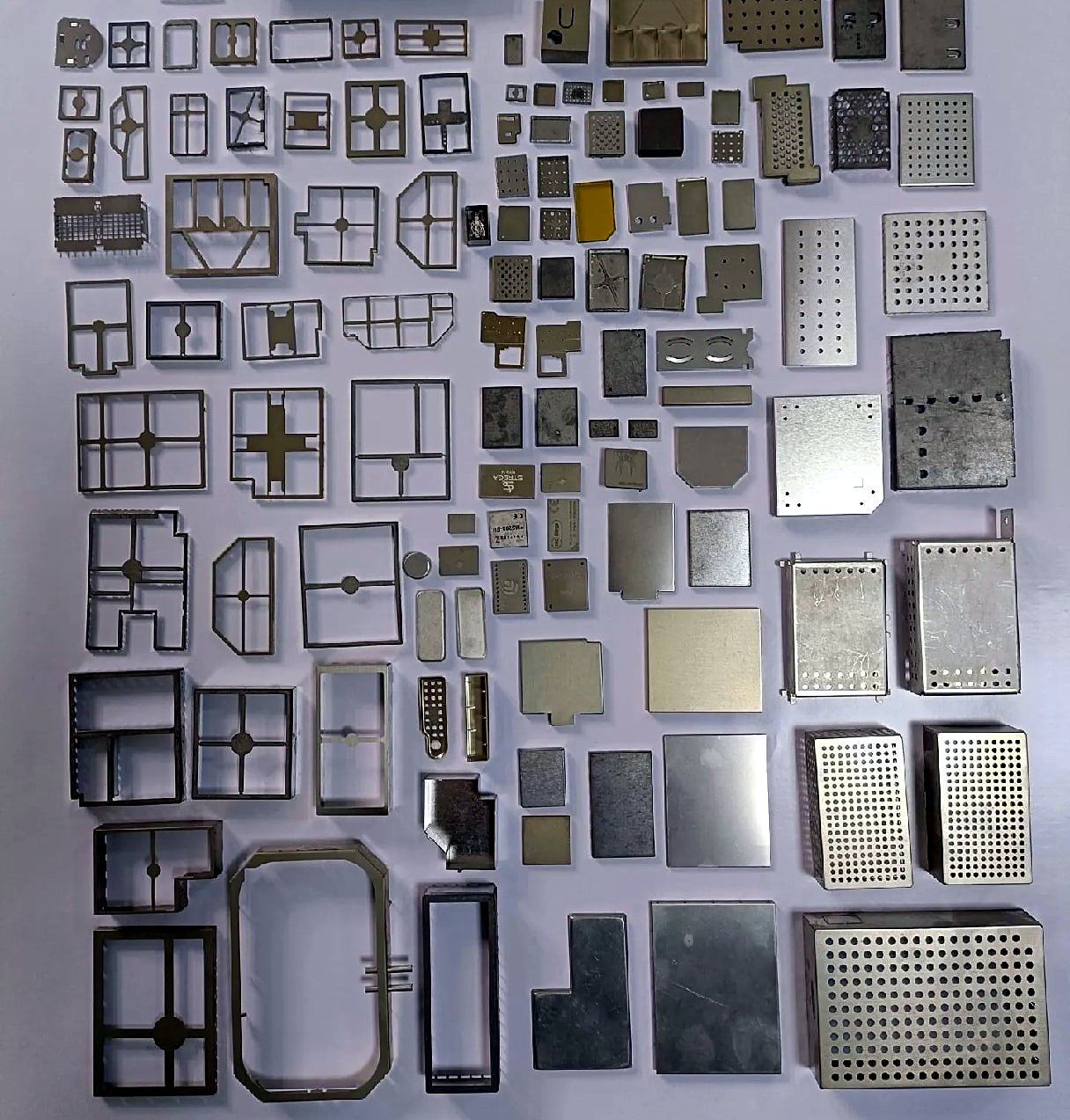
One-piece and two-piece board-level shields in nickel silver and steel.
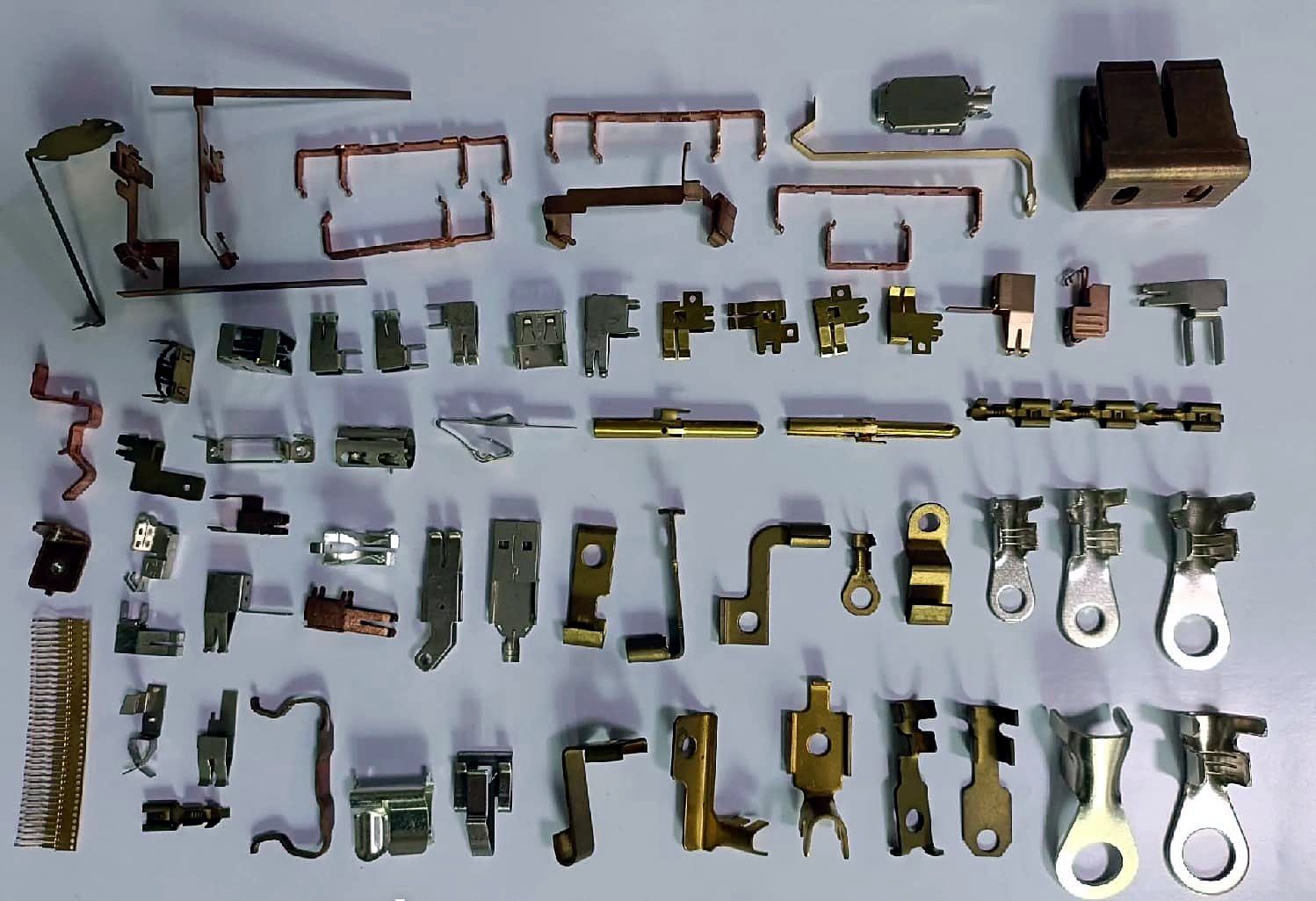
Copper-alloy terminals, lugs and contacts, loose or on carrier strip.
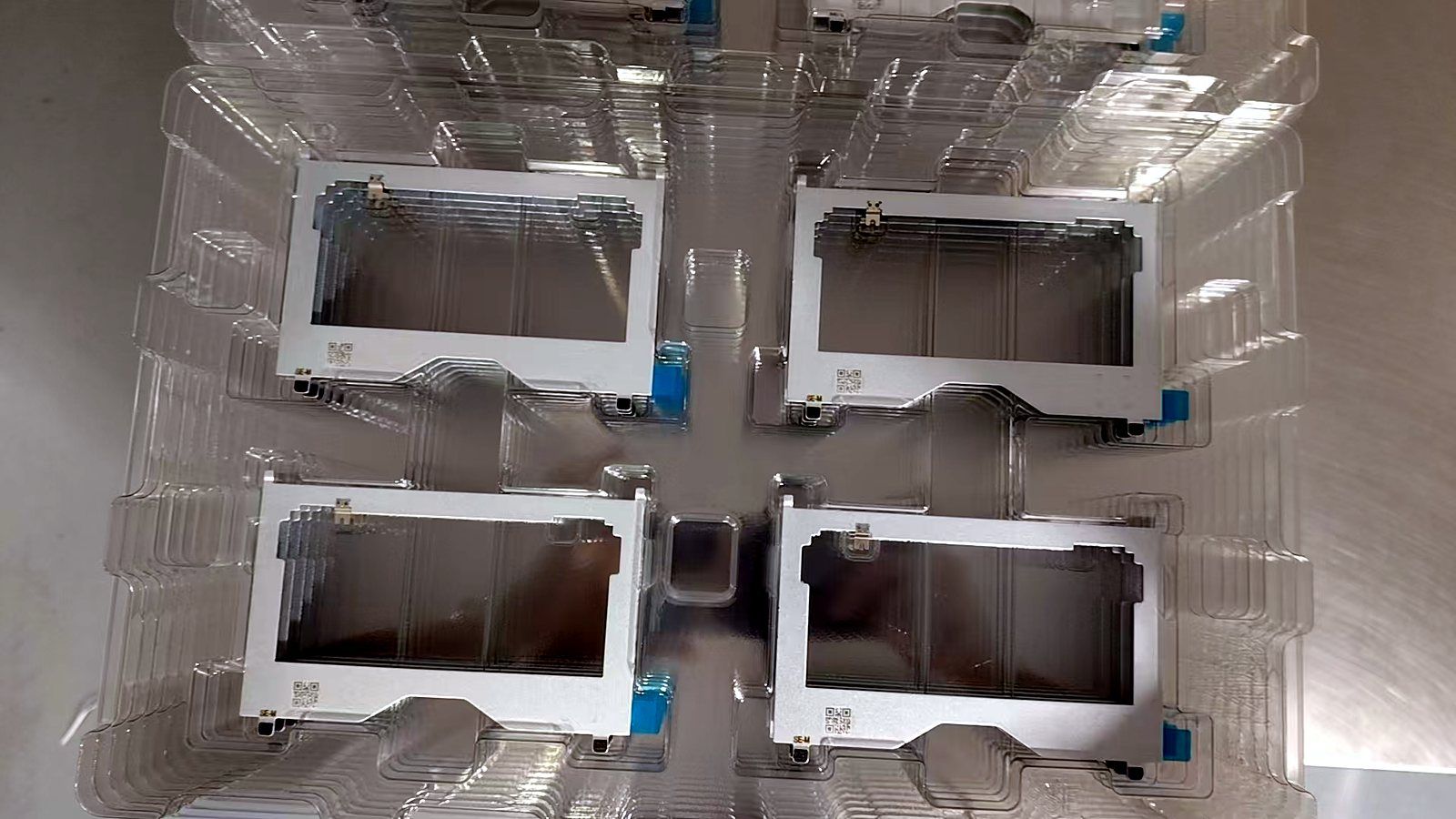
Flat springs, grounding fingers and battery contacts.

Multi-station dies fed from coil for high-volume small parts.

PCB, connector and mounting brackets stamped from steel, stainless and aluminium strip.
Cups, cans, shells and small housings drawn from strip.
Our presses are set up for small, high-volume parts where flatness and burr control matter more than size: board-level shielding cans and frames, connector terminals, spring contacts, deep-drawn parts, keyboard plates and stamped brackets for electronics and automation equipment.
Deep-drawn cups, shells and housings are quoted per drawing; achievable draw depth and diameter depend on material, thickness and the number of draw stages, and are confirmed when we review your part.
We do not take large automotive body panels or structural stampings. Those need bigger presses, IATF 16949 and a different supply chain, and you will get a better price elsewhere.
| Model | Maker | Qty | Bed size |
|---|---|---|---|
| SNI-60 | SEYI (Kunshan) | 2 | 900 × 520 mm |
| OCP-110 | Chin Fong (Taiwan) | 1 | 1150 × 680 mm |
| SNI-110 | SEYI (Kunshan) | 6 | 1150 × 680 mm |
| SNS2-160 | SEYI (Kunshan) | 1 | 1850 × 760 mm |
| SNS2-200 | SEYI (Kunshan) | 1 | 2200 × 840 mm |
| SNS2-250 | SEYI (Kunshan) | 2 | 2800 × 920 mm |
The right process depends mostly on annual volume and part size. Stamping has the lowest unit cost but needs a die; laser cutting and bending need no hard tooling but cost more per piece; machining suits thick, 3D parts that cannot be formed from sheet.
| Progressive-die stamping | Laser cut + bent sheet metal | CNC machining | |
|---|---|---|---|
| Tooling | Die required, paid once | None | Fixtures only |
| Unit cost | Lowest at volume | Medium | Highest |
| Typical volume | Thousands to millions per year | One to a few thousand | One to a few thousand |
| Thickness | 0.15–1.2 mm strip (our range) | Up to 20 mm sheet | Bar and plate |
| Repeatability | Very high, set by the die | High, set by machine program | High |
Most cost and quality problems in stamping are fixed at the drawing stage. These are typical rules of thumb for steel, stainless and copper alloys; we review every drawing against the actual material and temper before quoting the die.
Stamping is cheap per piece because the cost sits in the die. New progressive dies are built by our partner toolroom to our design review; the die belongs to you once paid for. Tooling cost and lead time depend on part size, number of stations and material, so we quote them per drawing.
The minimum order is 1,000 pieces, but stamping pays off at volume. If your annual quantity is a few hundred pieces, laser-cut and bent sheet metal is usually the cheaper route — we will tell you which one fits when we quote.
We run an ISO 9001:2015 quality system. The first article from a new die is measured in full on a vision measuring system before release. Production lots are checked by AQL sampling, with automated optical inspection at 100% on features you mark as critical. A dimensional report and material certificates (mill test certificates) ship with every lot on request.

We quote from 1,000 pieces. Below that, tooling cost usually outweighs the unit-price saving, and we will suggest laser cutting and bending instead.
You do, once the tooling invoice is paid. We keep and maintain it at our factory for your repeat orders.
We hold ±0.02 mm on critical dimensions and verify them on a vision measuring system. Non-critical dimensions follow your drawing or JIS B 0408 general tolerances.
Our production range is 0.15–1.2 mm strip, fed from coil. Materials in regular production include SUS304, A5052, C7701 nickel silver, SPCC and SGCC; other grades are quoted on request.
Sample cost and lead time depend on whether a die is needed and are confirmed per project in the quote. Payment terms are also confirmed in the quote.
No. We are ISO 9001 certified, not IATF 16949, and we focus on electronics and industrial parts.
Multi-station dies fed from coil for high-volume small parts.
One-piece and two-piece board-level shields in nickel silver and steel.
Copper-alloy terminals, lugs and contacts, loose or on carrier strip.
Flat springs, grounding fingers and battery contacts.
PCB, connector and mounting brackets stamped from steel, stainless and aluminium strip.
Cups, cans, shells and small housings drawn from strip.
How stamping die cost is amortized over annual volume, when stamping beats laser cutting, and what to send for an accurate tooling quote.
Shielding cans, terminals, contacts, brackets and springs for electronics.
ISO 9001 quality system, vision measuring, AQL sampling and AOI 100% inspection. Dimensional reports with every shipment of stamped and sheet metal parts.
Annual volume and your tightest tolerance help us quote tooling and unit price accurately the first time.