Send your drawing. Get a quote in 1 business day.
Include your annual volume and tightest tolerance, and we can quote tooling and unit price right the first time.
Custom stamped metal brackets — PCB and connector brackets, mounting plates, L- and U-brackets and small chassis parts — with critical hole positions held to ±0.02 mm so they line up in your assembly. We stamp them from 0.15–1.2 mm SPCC, SGCC, SUS304 and A5052 strip on 13 presses of 60–250 tons, from 1,000 pieces.
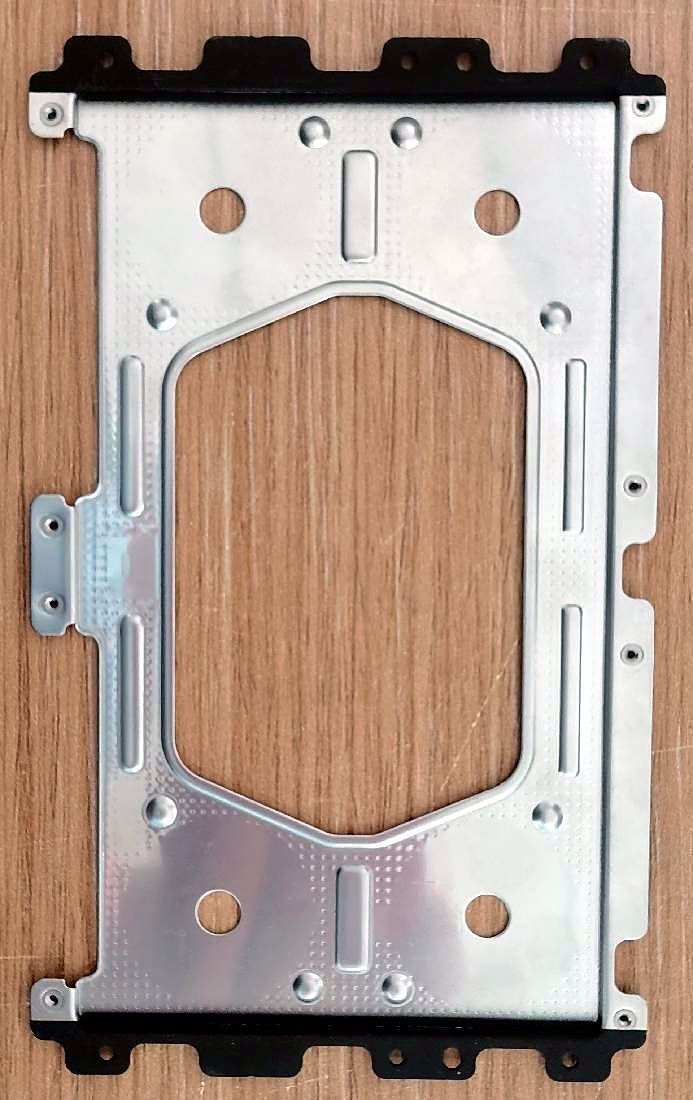
| Part types | PCB, connector and drive brackets, mounting plates, L/U/Z brackets, small chassis parts |
|---|---|
| Materials | SPCC, SGCC, SUS304, A5052 |
| Strip thickness | 0.15–1.2 mm |
| Presses | 13 presses, 60–250 T, bed up to 2800 × 920 mm |
| Tolerance | ±0.02 mm on critical features |
| Minimum order | 1,000 pcs |
| Finishing | Plating, powder coat, passivation via qualified partners |
Stamping suits small and medium brackets where hole position and flatness matter: brackets that hold a PCB, a connector, a fan or a drive inside a housing, mounting plates with tapped or extruded holes, and L-, U- and Z-shaped brackets that join two sub-assemblies.
Most brackets run on progressive dies fed from coil: blanking, piercing, forming and cut-off happen in one die, and every stroke delivers a finished part. Larger or low-volume brackets can be made on single-hit dies, or laser cut and bent in our sheet metal workshop with no die at all.
The answer depends on annual volume and thickness, not on the first order quantity. A die costs money once; laser cutting and press-brake bending cost more per piece but need no tooling.
| Stamped (progressive die) | Laser cut + CNC bent | |
|---|---|---|
| Tooling | Die required, built by our partner toolroom; you own it once paid | None |
| Unit cost | Lowest at volume | Higher per piece |
| Thickness we run | 0.15–1.2 mm strip | Up to 20 mm sheet |
| Typical volume | Thousands to hundreds of thousands per year | Prototypes to a few thousand per year |
| Design changes | Need die modification | Change the program |
| Minimum order | 1,000 pcs | Prototype quantities |
These are common rules of thumb for stamped brackets, where t is material thickness. Your drawing always governs; we flag anything outside these during the quote review.
| Material | Typical bracket use | Usual finish |
|---|---|---|
| SPCC cold-rolled steel | Internal brackets in electronics and equipment | Zinc or nickel plating, powder coat (partner) |
| SGCC galvanized steel | Brackets inside cabinets and housings, no extra coating needed | As supplied; cut edges unplated |
| SUS304 stainless steel | Exposed or humid locations, food and lab equipment | Bare, passivated or brushed (partner) |
| A5052 aluminum | Light brackets, heat-spreading plates | Bare or anodized (partner) |
Brackets usually carry threads. On thin strip a plain tapped hole has too few threads to hold, so we often recommend an extruded (burred) hole formed in the die and then tapped, which gives more thread length without a separate nut. Threads are checked with JIS 6H thread gauges.
If your design needs self-clinching nuts, studs or standoffs, show them on the drawing and we confirm how they will be installed in the quote.
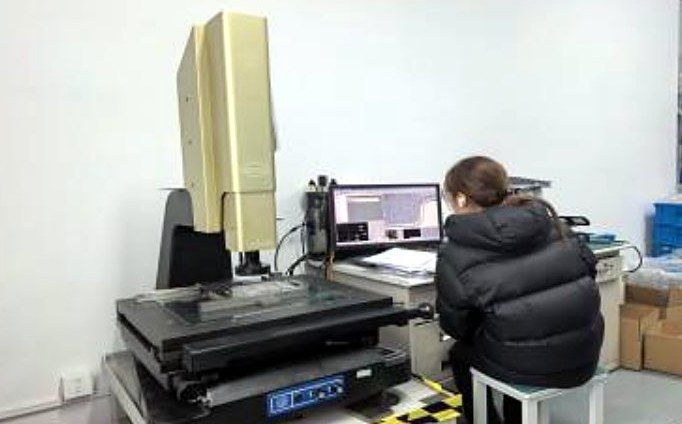
First articles are measured in full on a vision measuring system (400 × 300 × 250 mm travel). In production, every lot is AQL sampled and critical features such as hole positions are checked by automated optical inspection. A dimensional report and material certificates (mill test certificates) are available with every delivery.
1,000 pieces. If you need fewer, a laser-cut and bent bracket avoids the die cost, and we can quote both routes.
Our stamping lines run strip from 0.15 to 1.2 mm. Thicker brackets are laser cut and CNC bent in our sheet metal workshop, which handles sheet up to 20 mm.
You do, once the tooling invoice is paid. Dies are built by our partner toolroom to our design review and kept at our factory for repeat orders.
Yes, through qualified finishing partners. State the finish and thickness on the drawing and we include it in the quote.
Sample cost, tooling lead time and payment terms depend on the part and are confirmed per project in the quote.
Precision metal stamping from Suzhou: shielding cans, terminals, clips and brackets held to ±0.02 mm. MOQ 1,000 pcs, ISO 9001, quotes in 1 business day.
Multi-station dies fed from coil for high-volume small parts.
Cups, cans, shells and small housings drawn from strip.
How stamping tooling cost spreads over annual volume, when stamping beats laser cutting, and what to send for an accurate quote. Worked example inside.
Low-cost cold-rolled steel for brackets, chassis and painted enclosures.
Include your annual volume and tightest tolerance, and we can quote tooling and unit price right the first time.