Send your drawing. Get a quote in 1 business day.
Annual volume and your tightest tolerance help us quote tooling and unit price accurately the first time.
Sierxi fabricates electrical enclosures, equipment housings and energy-storage cabinets in Suzhou with in-house fiber laser cutting, CNC press brakes and laser welding. We cut sheets up to 1500 × 3000 mm and 20 mm thick, bend lengths up to 3 m, and build cabinets up to 3000 mm tall and 1500 mm wide.
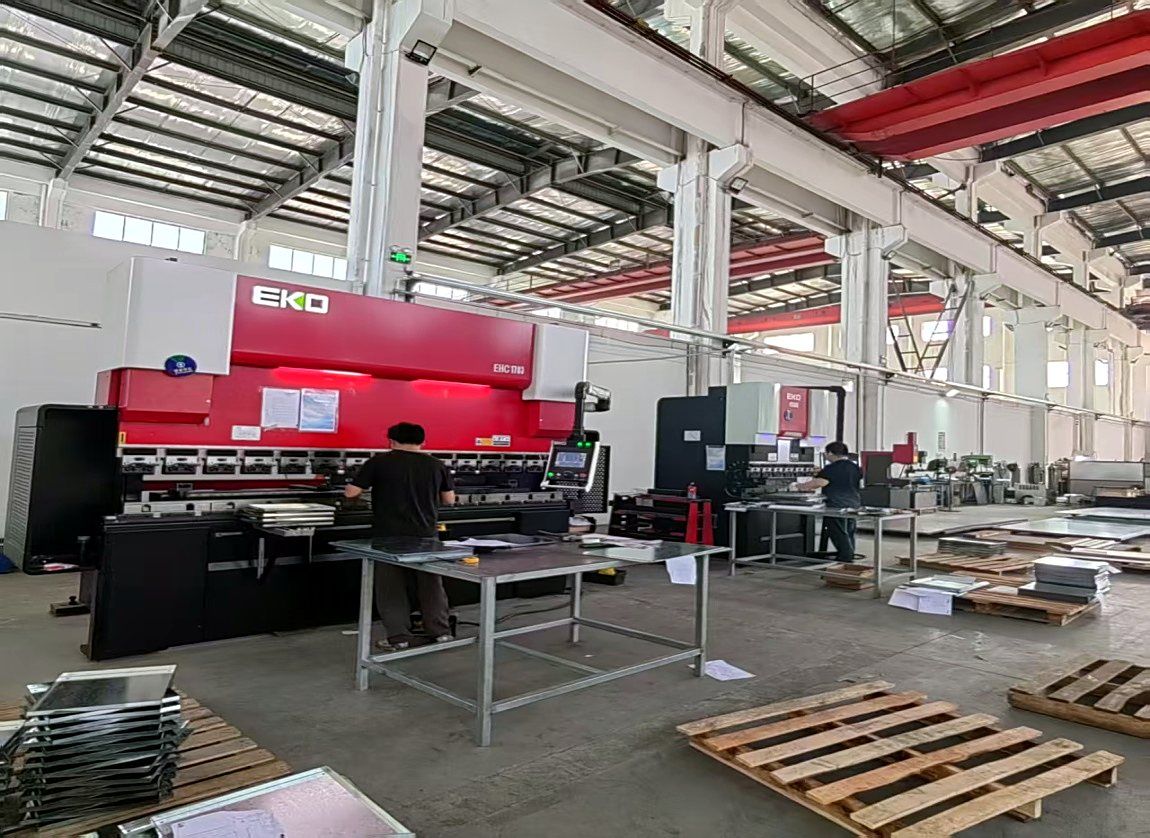
| Cutting | In-house fiber laser cutting |
|---|---|
| Max sheet size | 1500 × 3000 mm |
| Max thickness | 20 mm |
| Bending | CNC press brakes, up to 3 m |
| Welding | 5 laser welders + conventional welding |
| Largest cabinet | 3000 mm tall × 1500 mm wide |
| Finishing | Powder coating, painting, plating, brushing via partners |
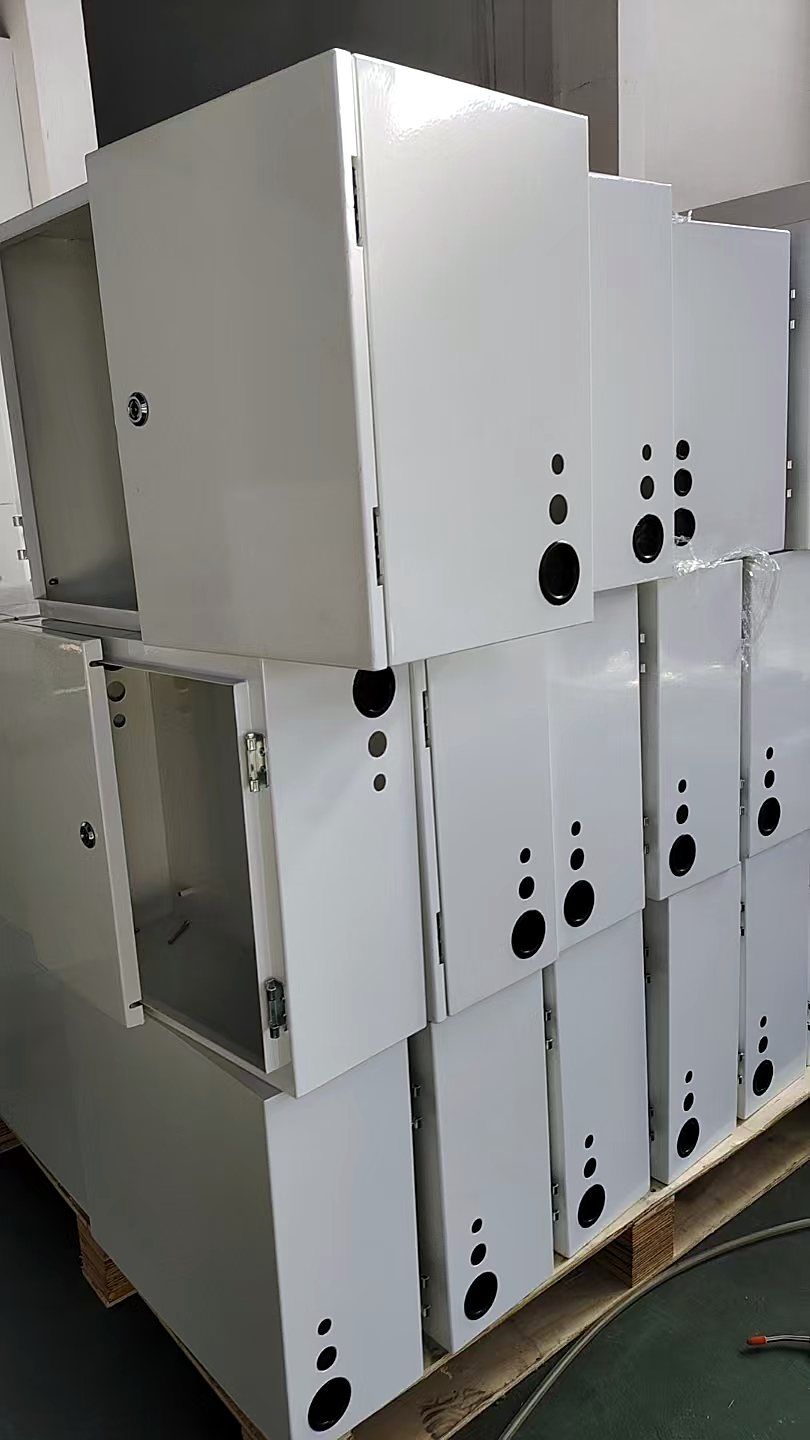
Control boxes, cabinets and automation-equipment housings.

Frames, doors, shelves and skins for battery cabinets.

Laser cut, bent and laser welded stainless enclosures, panels and frames.

Low-distortion laser welding of enclosures, frames and stamped assemblies.

Tool-free prototypes and small batches, with a path to stamping.
Blanks are cut on a fiber laser, formed on CNC press brakes and joined by laser or conventional welding. Inserts, studs and hardware are fitted in-house before parts go out for coating, then come back for final assembly and inspection.
| Step | Where |
|---|---|
| Fiber laser cutting | In-house |
| CNC bending (up to 3 m) | In-house |
| Laser welding (5 machines) and conventional welding | In-house |
| Hardware insertion and assembly | In-house |
| Inspection and dimensional report | In-house |
| Powder coating, painting, plating, brushing | Qualified finishing partners |
These rules of thumb keep parts within tolerance and avoid extra cost. They are typical values for air bending of steel and aluminium; we check each drawing against the actual tooling before quoting.
| Material | Corrosion resistance | Weldability | Typical use |
|---|---|---|---|
| SPCC cold-rolled steel | Low — needs coating | Good | Indoor enclosures, painted or powder coated |
| SGCC galvanized steel | Moderate | Fair (zinc fumes at welds) | Mounting plates, internal frames, cabinets |
| SUS304 stainless steel | High | Good — suits laser welding | Food, outdoor and wash-down equipment |
| A5052 aluminium | Good | Fair — needs care | Light covers and housings |
Laser welding puts less heat into the part than MIG or TIG welding, so thin panels distort less and stainless seams need less grinding and polishing. It suits visible seams, thin sheet and precise assemblies. Conventional welding is still used for thick sections and structural frames where gap tolerance is larger. We choose the method per joint and show it on the process plan.
Laser cutting and bending need no hard tooling, so sheet metal is the right process for prototypes and runs of a few to a few hundred units. When a part moves to tens of thousands a year, we can review it for conversion to stamping.
We work under an ISO 9001:2015 quality system. First articles are measured against the drawing; production lots are inspected by AQL sampling. Small parts are measured on a vision measuring system, threads are checked with JIS 6H thread gauges, and a dimensional report can ship with each lot. Material certificates (mill test certificates) are supplied with every lot on request.
Cabinets and enclosures are bulky and dent easily, so packaging and freight are quoted per market. We do not promise one global lead time; tell us the destination and we will quote packing and freight with the parts.
Yes. Fiber laser cutting, CNC bending and laser welding are all done in our own workshop. Surface finishing is done by qualified partners.
Up to 3000 mm tall and 1500 mm wide, from sheets up to 1500 × 3000 mm.
Yes. Sheet metal needs no hard tooling, so we quote prototypes and small batches from your drawing.
Up to 20 mm, on sheets up to 1500 × 3000 mm. Bending length is up to 3 m.
Your drawing first. Where general tolerances are not stated, JIS B 0408 or ISO 2768 is agreed in the quote.
Sample cost, lead time and payment terms are confirmed per project in the quote.
Control boxes, cabinets and automation-equipment housings.
Frames, doors, shelves and skins for battery cabinets.
Laser cut, bent and laser welded stainless enclosures, panels and frames.
Low-distortion laser welding of enclosures, frames and stamped assemblies.
Tool-free prototypes and small batches, with a path to stamping.
JIS B 0408 general dimensional tolerances for blanked and bent/drawn metal press parts, grades A, B and C, and how to call them out on drawings.
How sheet metal enclosures and stamped parts are commonly classified (7326, 7616, 8538, 8473, 9403) and why it matters for duty and EU CBAM.
Annual volume and your tightest tolerance help us quote tooling and unit price accurately the first time.