Send your drawing. Get a quote in 1 business day.
Annual volume and your tightest tolerance help us quote tooling and unit price accurately the first time.
Sierxi builds custom sheet metal electrical enclosures, control boxes and automation-equipment housings in Suzhou. Panels are laser cut, CNC bent and welded in-house, then powder coated by a finishing partner. We build from one prototype to production runs, up to 3000 mm tall and 1500 mm wide.
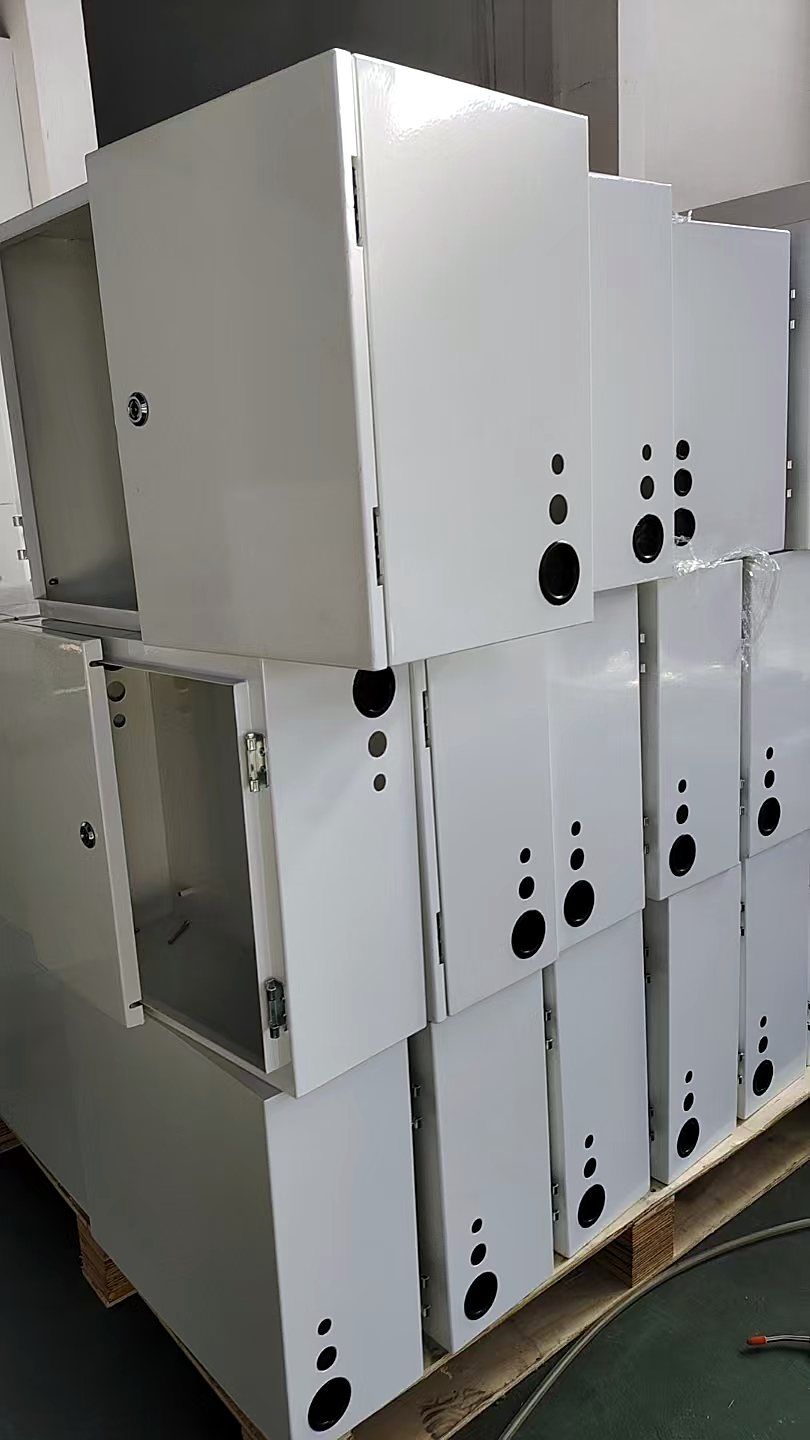
| Products | Control boxes, electrical cabinets, machine housings |
|---|---|
| Materials | Cold-rolled steel, galvanized steel, stainless, aluminium |
| Size | Up to 3000 × 1500 mm |
| Finish | Powder coat or paint (partner), brushed stainless |
| Quantity | Prototype to production |

| Material | Typical environment | Finish |
|---|---|---|
| SPCC cold-rolled steel | Indoor control rooms and machines | Powder coat or paint (partner) |
| SGCC galvanized steel | Internal mounting plates, frames | Bare or coated |
| SUS304 stainless steel | Outdoor, food and wash-down areas | Brushed or bare |
| A5052 aluminium | Weight-sensitive housings | Coated or anodised (partner) |
An enclosure’s IP rating comes from its design — seams, door returns, gasket compression and cable entries — and is confirmed by testing the finished assembly. We build to the sealing design on your drawing; IP testing of the complete enclosure is done by you or your test lab.
Laser welding is used where seams are visible or panels are thin, because it distorts the sheet less than conventional welding and reduces grinding before coating.
| Welded body | Bolted frame + panels | |
|---|---|---|
| Sealing | Easier — continuous seams | Relies on gaskets at every joint |
| Stiffness | High | Depends on frame design |
| Shipping | Ships as one volume | Can ship flat-packed and assemble on site |
| Changes | Harder to modify after welding | Panels can be replaced individually |
| Typical use | Wall-mount boxes, small cabinets | Large cabinets and machine housings |
Powder coat insulates, so earth studs, bonding points and door-to-body earth connections must be masked before coating or fitted with serrated washers. Mark the masked areas on the drawing. Studs and self-clinching nuts are fitted in-house before parts go out to the coating partner.
Typical powder coat thickness is in the range of about 60–120 µm; state your requirement, colour and texture on the drawing and we pass it to the finishing partner.
Mounting plates are usually galvanized steel so components can be earthed directly. Doors are hung on the hinges and locks you specify, or equivalents you approve. Tell us the hardware list with the RFQ; we fit and check it before shipping.
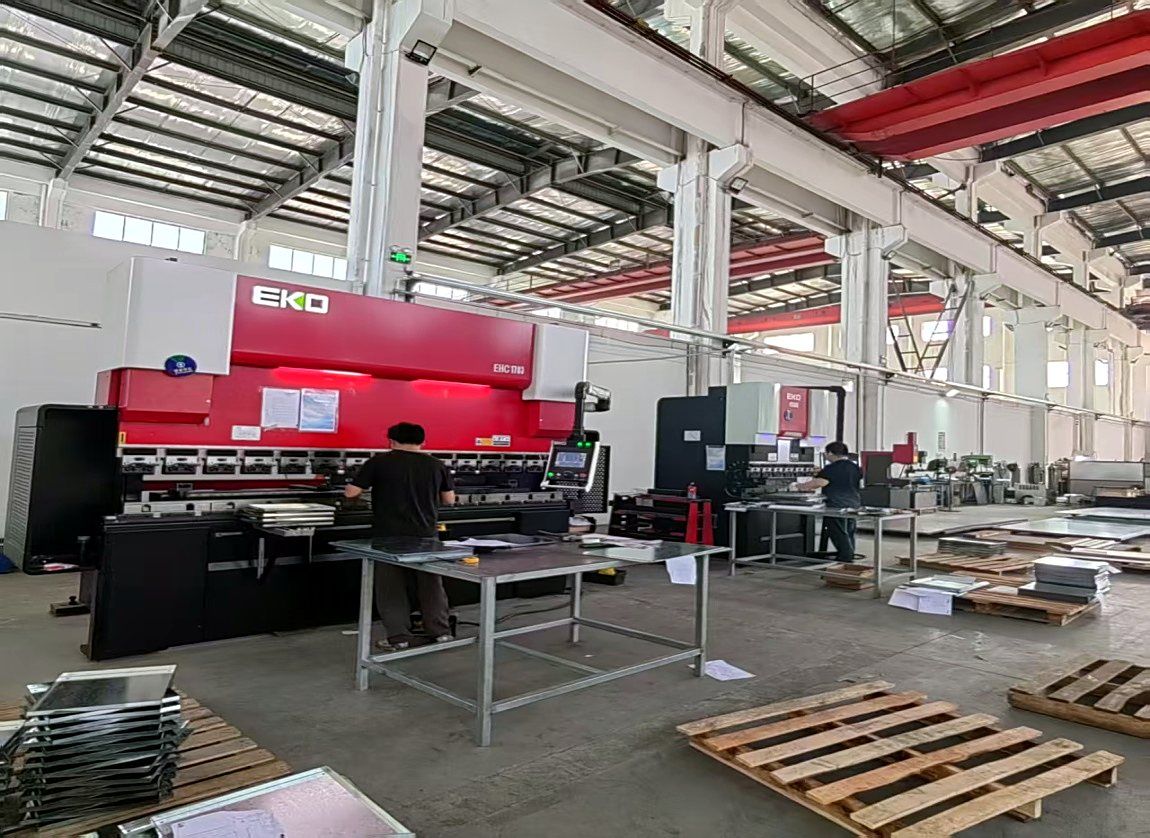
We work under an ISO 9001:2015 quality system. Each first article is checked against the drawing for overall size, cut-out positions, door fit and hardware. Threads in nuts and studs are checked with JIS 6H thread gauges. Production lots are inspected by AQL sampling, and every coated part is inspected when it returns from the finishing partner: coating coverage and finish against the agreed standard, coating thickness, and adhesion by cross-hatch test. A dimensional report can ship with each lot.
How an enclosure is classified on import — for example HS 7326 (other articles of steel) or 8538 (parts for electrical switchgear) — changes the duty and, in the EU, whether CBAM reporting applies. Classification is the importer’s decision; we supply drawings and material data to support it. See our guide to HS codes for enclosures.
We build to your sealing design — welded corners, door returns, gaskets and cable entries. The IP rating of the finished enclosure is confirmed by testing on your side or at your test lab.
No. Powder coating and painting are done by qualified finishing partners. Cutting, bending, welding, hardware fitting and assembly are in-house.
Yes. No hard tooling is needed, so we quote from one unit. Sample cost and lead time are confirmed per project in the quote.
Up to 3000 mm tall and 1500 mm wide.
No. We supply the sheet metal enclosure and the mechanical hardware you specify; wiring and electrical components stay with you.
Packing is chosen to protect coated surfaces and is quoted per destination together with freight.
Laser cutting, CNC bending and laser welding of enclosures and cabinets in Suzhou. Sheets to 1500 × 3000 mm and 20 mm thick, bends to 3 m.
Frames, doors, shelves and skins for battery cabinets.
Laser cut, bent and laser welded stainless enclosures, panels and frames.
Housings, guards, frames, brackets and springs for machine builders.
Low-cost cold-rolled steel for brackets, chassis and painted enclosures.
How sheet metal enclosures and stamped parts are commonly classified (7326, 7616, 8538, 8473, 9403) and why it matters for duty and EU CBAM.
Which steel and aluminium parts fall under EU CBAM (Regulation 2023/956), the 50-tonne threshold, and what data a Chinese supplier can provide.
Annual volume and your tightest tolerance help us quote tooling and unit price accurately the first time.