Send your drawing. Get a quote in 1 business day.
Include your annual volume and tightest tolerance, and we can quote tooling and unit price right the first time.
The EU Carbon Border Adjustment Mechanism, set up by Regulation (EU) 2023/956, covers imported iron, steel and aluminum goods including articles under CN 7318, 7326 and 7616, but not 8538 or 8708. Its definitive period began on 1 January 2026. After the 2025 simplification, importers below 50 tonnes a year are exempt. Check current rules before import.
CBAM puts a carbon price on the emissions embedded in certain imported goods, so that EU importers pay a price comparable to EU producers under the EU Emissions Trading System. It is set up by Regulation (EU) 2023/956.
A transitional period ran from 1 October 2023 to 31 December 2025, during which importers filed quarterly reports on embedded emissions but paid nothing. The definitive period began on 1 January 2026: importing CBAM goods above the threshold requires the status of authorized CBAM declarant, an annual CBAM declaration, and the purchase and surrender of CBAM certificates.
Scope follows the Combined Nomenclature (CN) code listed in Annex I of the regulation. For iron and steel the annex lists most of Chapter 72 plus specific Chapter 73 headings; for aluminum, specific Chapter 76 headings.
| CN heading | Typical parts | In CBAM scope? |
|---|---|---|
| 7318 | Screws, bolts, nuts, washers and similar steel fasteners | Yes |
| 7326 | Other articles of iron or steel: brackets, covers, enclosures | Yes |
| 7308 | Steel structures and parts of structures | Yes |
| 7616 | Other articles of aluminum | Yes |
| 7610 | Aluminum structures and parts of structures | Yes |
| 7320 | Springs of iron or steel | No (not listed in Annex I) |
| 8538 | Parts for electrical switchgear and control panels | No |
| 8708 | Parts of motor vehicles | No |
| Copper alloys (Chapter 74) | Nickel-silver shields, copper terminals | No |
Regulation (EU) 2025/2083 amended the CBAM regulation. The change most relevant to small buyers is a mass-based de minimis threshold: an importer whose combined imports of iron and steel, aluminum, cement and fertilizer goods stay below 50 tonnes per calendar year is exempt from CBAM obligations. It replaced the earlier low-value exemption per consignment.
The amendments also adjusted administrative steps such as declaration and certificate timelines. Because these details are still being implemented through further acts and guidance, confirm the current deadlines with the European Commission’s CBAM pages or your customs adviser before you import.
The obligations sit with the EU side: the importer or an indirect customs representative must be an authorized CBAM declarant, file the declaration and surrender certificates. A non-EU supplier has no CBAM filing of its own, but its data decides whether the importer can use actual emissions or must fall back on default values published by the Commission.
Classification is also the importer’s decision. The same part can be 7326 or 8538 depending on its function, and only one of those is in scope. See our guide to HS codes for enclosures.
| Data item | Why the importer needs it | What we can provide |
|---|---|---|
| Net mass per part and per shipment | CBAM quantities are declared in tonnes | Yes, from our weights and packing lists |
| Steel or aluminum content | Separates CBAM metal from plastic or other parts in an assembly | Yes, from the bill of materials |
| Material grade and mill certificate | Identifies the precursor (coil or sheet) and its producer | Yes, from the material supplier’s mill certificate |
| Production route | Embedded emissions depend on how the goods are made | Yes: purchased coil or sheet, then stamping, laser cutting, bending or welding; finishing by partners |
| Installation information | Name, address and location of the production site | Yes: our Suzhou factory |
| Emissions data (direct, indirect, precursors) | Needed to use actual instead of default values | We support data requests; we do not currently hold verified emissions data |
If classified under CN 7326 (steel) or 7616 (aluminum), yes. If classified as parts of switchgear under 8538, no. Classification depends on the part’s function and is the importer’s decision.
Heading 7320 (springs of iron or steel) is not listed in Annex I of Regulation (EU) 2023/956. Check the current annex before import, as scope may be extended.
Under the 2025 amendment, importers below 50 tonnes of CBAM goods per calendar year are exempt. Check the current rules for how the threshold is calculated.
We support data requests with weights, material content, production route and installation information. We do not currently hold verified emissions data, so importers may need to use default values.
No. It is a summary for buyers. CBAM rules and implementing acts are still evolving; check current rules before import and consult your customs adviser.
Which HS code fits your sheet metal enclosure or stamped part — 7326, 7616, 8538, 8473 or 9403 — and how the choice changes duty and EU CBAM.
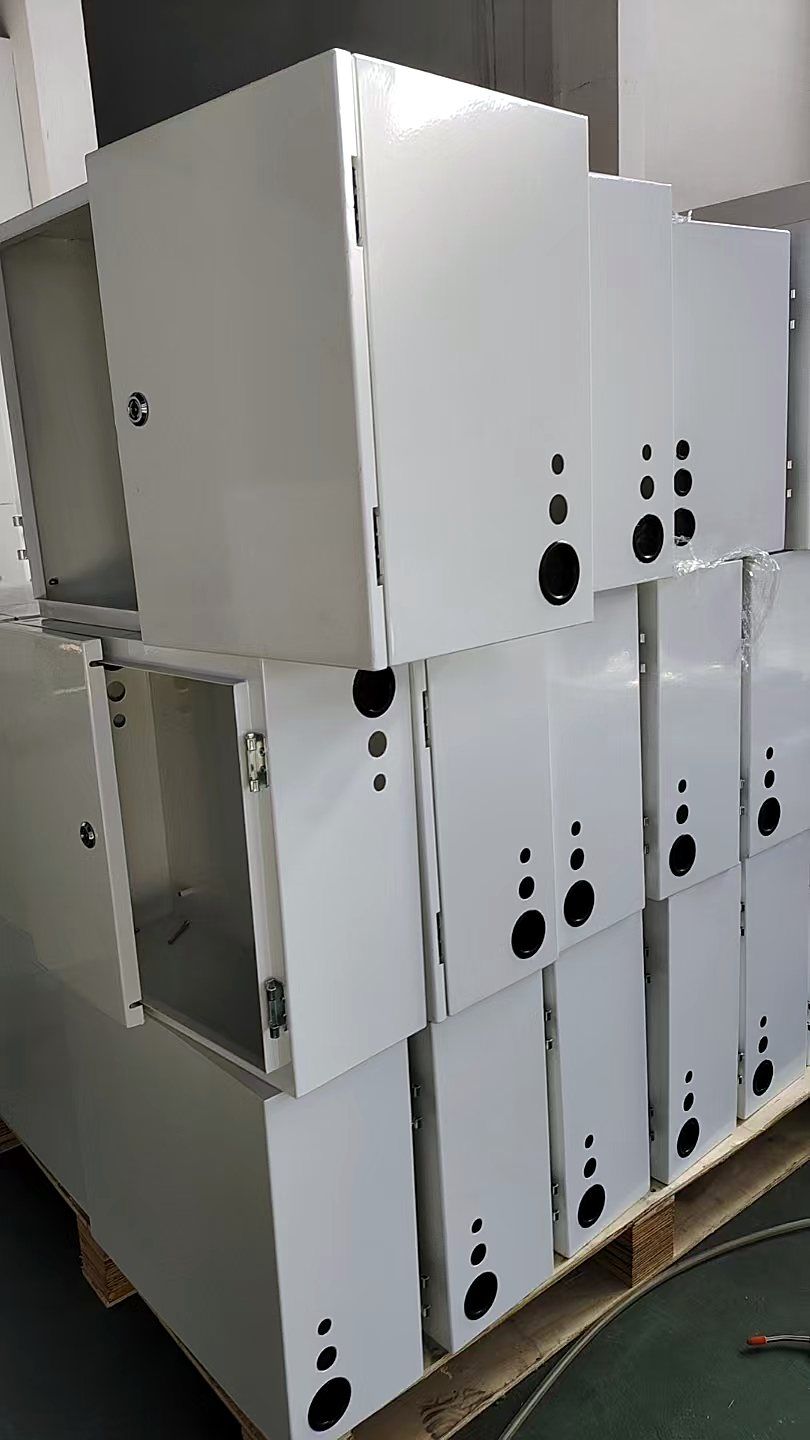
Control boxes, cabinets and automation-equipment housings.
PCB, connector and mounting brackets stamped from steel, stainless and aluminum strip.
Duty, GST, ChAFTA certificate of origin, customs and ISPM 15 packaging when importing stamped and sheet metal parts from China to Australia.
Include your annual volume and tightest tolerance, and we can quote tooling and unit price right the first time.