Send your drawing. Get a quote in 1 business day.
Include your annual volume and tightest tolerance, and we can quote tooling and unit price right the first time.
Choosing between metal stamping, laser cutting and CNC machining comes down to annual volume and part geometry. Stamping needs a die but gives the lowest unit price at tens of thousands of parts a year. Laser cutting needs no tooling and suits prototypes and low volumes. CNC machining suits thick, 3D or very tight-tolerance features.
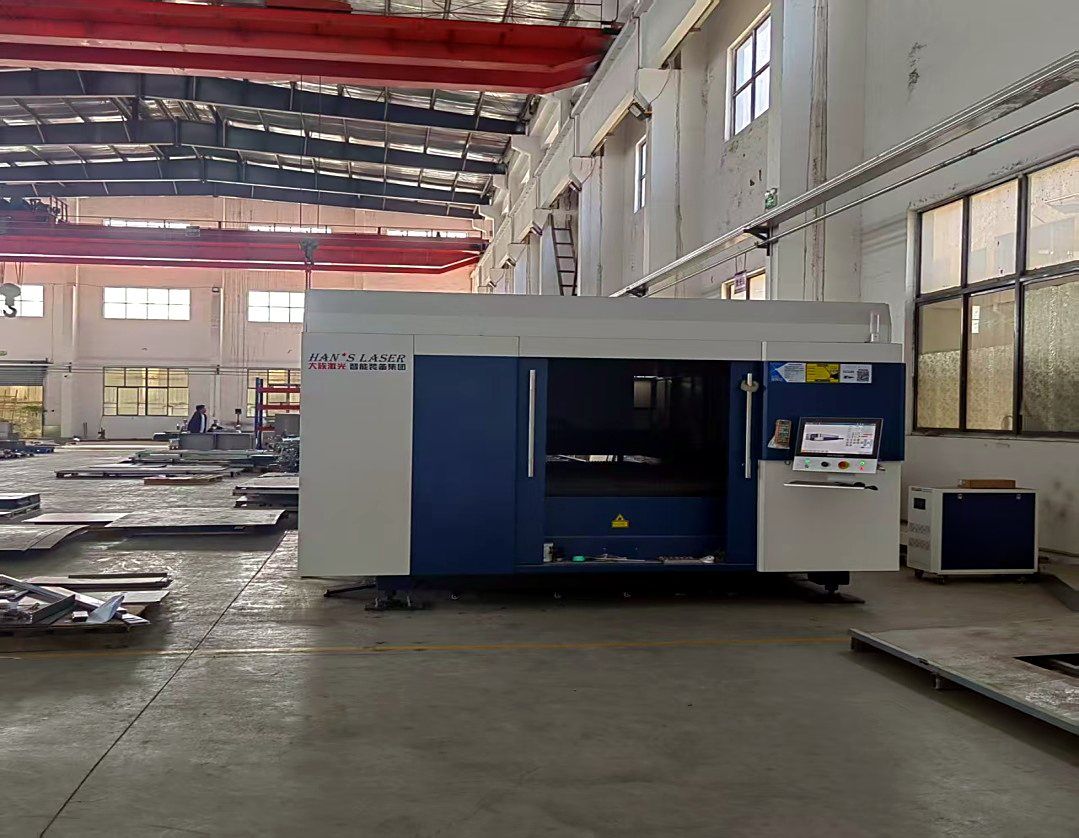
If the part is made from sheet or strip up to a few millimeters thick and you need tens of thousands a year or more, stamping is usually cheapest. If you need a few to a few thousand parts, or the design is still changing, laser cutting and CNC bending is usually cheapest and fastest. If the part is a solid block, has pockets, threads or 3D surfaces, or needs tolerances finer than sheet processes can hold, it is a CNC machining part.
Many parts sit in between. The rest of this guide shows how to decide with numbers.
Each process splits cost between a one-time investment and a recurring per-part cost. The split is what drives the decision.
| Process | One-time cost | Per-part cost driver | Cost behavior with volume |
|---|---|---|---|
| Metal stamping | Die (single-stage, compound or progressive) | Press time is seconds or less per part; material utilization | Unit price falls steeply; die cost spreads over all parts |
| Laser cutting + bending | Programming and setup only | Cutting length, pierces, number of bends, handling | Unit price falls only a little with volume |
| CNC machining | Programming, fixtures, sometimes special cutters | Machine time per part, material removed, setups | Unit price falls modestly; cycle time stays |
Compare total cost over the life of the part, not the first order. For each process: total cost = one-time cost + (unit price × total quantity). The break-even quantity is where the two totals meet: break-even = tooling cost ÷ (laser unit price − stamping unit price).
Use the volume you expect over the die’s life, usually several years of demand. A die built for a part that runs for five years is paid off by five years of orders, not the first batch.
The table below is an example only. Real figures depend on part size, material, thickness, number of stations and finish, and change from part to part.
| Lifetime quantity | Laser + bend total (example US$ 1.20/pc) | Stamping total (example US$ 6,000 die + US$ 0.25/pc) | Cheaper route |
|---|---|---|---|
| 1,000 | US$ 1,200 | US$ 6,250 | Laser |
| 5,000 | US$ 6,000 | US$ 7,250 | Laser |
| 6,300 (break-even) | US$ 7,560 | US$ 7,575 | About equal |
| 20,000 | US$ 24,000 | US$ 11,000 | Stamping |
| 100,000 | US$ 120,000 | US$ 31,000 | Stamping |
The figures below are typical general-industry values for well-maintained equipment and suitable designs. Your drawing, material and part size change what is realistic, so treat them as a starting point for a conversation with the supplier.
| Item | Metal stamping | Laser cutting + bending | CNC machining |
|---|---|---|---|
| Typical tolerance | ±0.05–0.1 mm; ±0.02 mm on critical features with a precise die | ±0.1 mm cut; ±0.2–0.5 mm across bends | ±0.01–0.05 mm routine; tighter possible |
| Repeatability | Very high: the die fixes the geometry | Good; depends on bend setup | High; depends on fixturing and tool wear |
| Typical features | Holes, forms, embosses, louvers, tabs, deep draws, coined features | Any 2D profile, bends, PEM hardware, welds | Pockets, threads, bores, 3D surfaces, tight flatness |
| Edge condition | Shear and fracture zone, small burr on one side | Clean cut, slight taper and heat tint | Machined finish |
| Design change | Costly once the die is built | Change the file and cut again | Change the program |
Stamping lead time is dominated by the die. Building and trying out a progressive die usually takes several weeks before the first samples. After that, production is fast: our stamping capacity is about 300,000 pieces per month across all parts.
Laser cutting and bending has no tooling wait. Once the flat pattern is approved, parts can be cut the same week, so it is the fastest route to first parts. Throughput per part is slower than stamping, which matters only at high volume.
CNC machining lead time depends on programming, fixtures, material stock and machine queue. Cycle time per part is long, so large quantities take longer to deliver.
The most common combination is laser-cut prototypes followed by stamped production. Laser-cut and bent parts let you test fit and function without paying for a die. When the design is frozen and the forecast is firm, the die is built and the same part moves to stamping.
Plan for the change from the start. Stamped features such as embosses, extruded holes or coined edges cannot be copied exactly by laser. Agree which features may differ between prototype and production parts so you do not have to requalify.
Other useful combinations: a stamped blank with a few machined features added after; a laser-cut panel with stamped brackets laser-welded to it; or a soft (short-run) die as a bridge between laser parts and a full progressive die.
| Your situation | Usual best fit | Why |
|---|---|---|
| Prototype or design still changing | Laser cutting + bending | No tooling; change the file, not the die |
| Under about 1,000 parts a year | Laser cutting + bending | Die cost cannot be recovered |
| Tens of thousands of parts a year, sheet under ~6 mm | Metal stamping | Lowest unit price once the die is paid |
| Small part, high volume, tight hole positions | Progressive die stamping | Die fixes geometry |
| Large panels, cabinets, thick plate | Laser cutting + bending | Size and thickness beyond typical dies |
| Solid part, pockets, threads, 3D surfaces | CNC machining | Sheet processes cannot make these features |
| Sheet part with one very tight bore | Stamping or laser, then machine the bore | Use each process where it is strongest |
We do metal stamping, deep drawing, fiber laser cutting, CNC bending and laser welding in-house in Suzhou. We do not do CNC machining in-house. If your part is truly a machined part, a machining specialist is the better choice, and we will tell you so. Where a sheet or stamped part needs one or two machined features, we discuss the options with you at quote stage.
Because we run both laser and stamping lines, we can quote both routes for the same drawing and show where the break-even sits for your volume.
Per part, yes, usually by a wide margin. In total, only once volume is high enough to pay for the die. Work out the break-even quantity: tooling cost divided by the difference in unit price.
There is no fixed number. For many small sheet parts the break-even sits somewhere between a few thousand and a few tens of thousands of parts over the die’s life. Calculate it with real quotes for both routes.
For fit and function, usually yes. Edge condition, burr direction and formed features such as embosses or extruded holes may differ, so agree which features need to match before you test.
Machining can hold tighter tolerances on individual features. Stamping holds hole-to-hole positions very consistently because the die fixes them, and we hold ±0.02 mm on critical stamped features.
No, not in-house. We do stamping, deep drawing, laser cutting, CNC bending and laser welding. For fully machined parts we recommend a machining specialist.
1,000 pieces. Below that, or at low annual volumes, laser-cut and bent parts are usually the cheaper route.
How stamping tooling cost spreads over annual volume, when stamping beats laser cutting, and what to send for an accurate quote. Worked example inside.
Precision metal stamping from Suzhou: shielding cans, terminals, clips and brackets held to ±0.02 mm. MOQ 1,000 pcs, ISO 9001, quotes in 1 business day.
Multi-station dies fed from coil for high-volume small parts.
Custom sheet metal fabrication in Suzhou: enclosures and cabinets laser cut, bent and welded in-house. Sheet to 1500 × 3000 mm and 20 mm, bends to 3 m.
Tool-free prototypes and small batches, with a path to stamping.
Include your annual volume and tightest tolerance, and we can quote tooling and unit price right the first time.